Time is a peculiar thing.
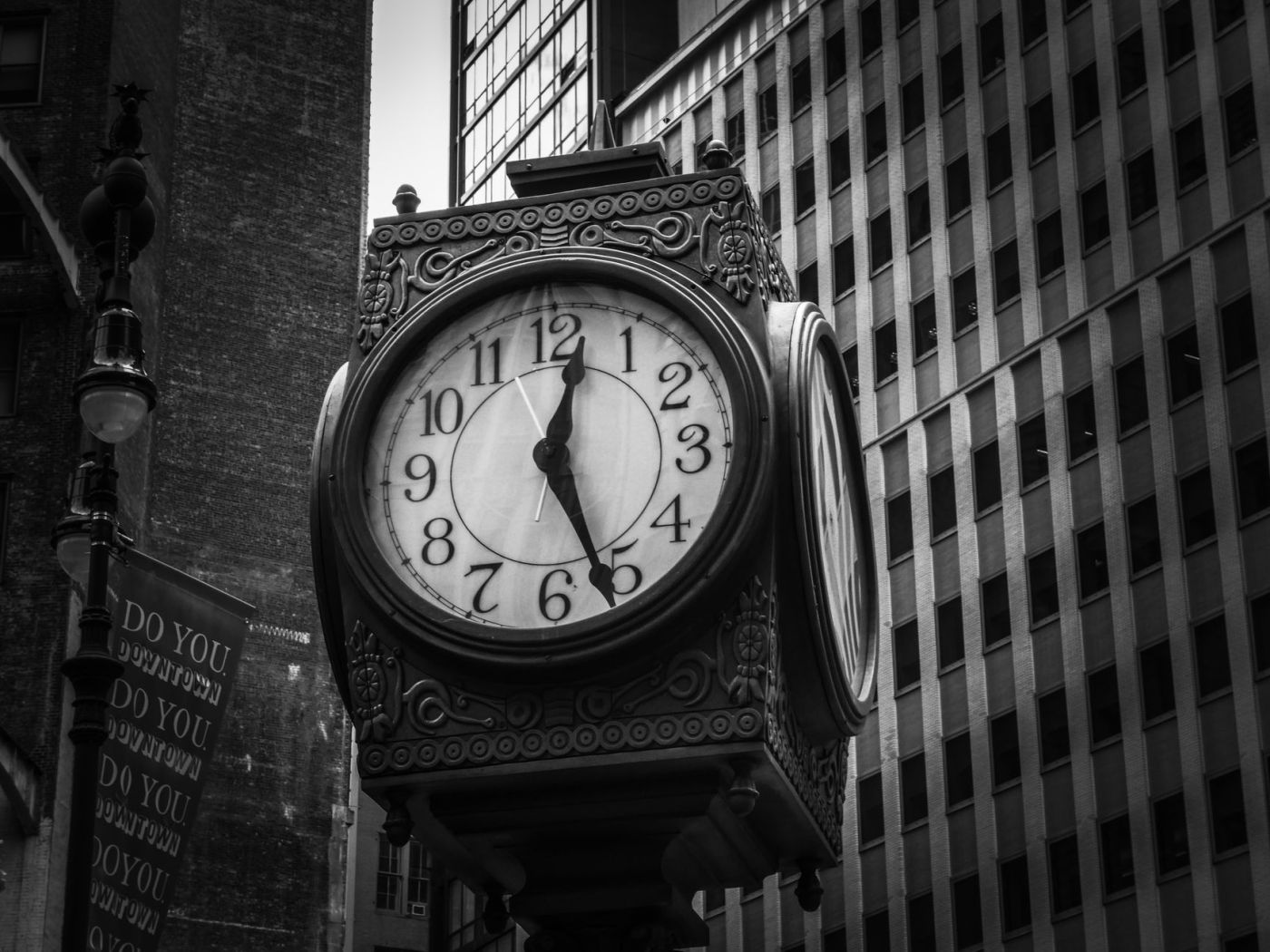
Five minutes can disappear somewhere between opening an email and remembering why you opened it, while the final five minutes of a meeting can feel as though the clock has simply given up. A child grows up in what feels like a weekend. A difficult Tuesday can make Wednesday feel impossibly far away. Christmas arrives every twelve minutes, but somehow the microwave still takes an unreasonable amount of time to warm up the leftovers.
We measure time with great confidence for something we experience so inconsistently. There are twenty-four hours in a day, seven days in a week, roughly thirty days in a month, and 365 days in a year. These numbers appear wonderfully organized on paper. Time itself, however, rarely behaves as neatly as the calendar suggests. An hour spent laughing with friends feels a bit different from an hour spent revising the same paragraph because the words refuse to cooperate with the flow of the paper. Both occupy sixty minutes, yet one feels a tad more refreshing than the other.
Time becomes even more complicated once we start dividing those hours among everything that needs our attention. We allocate a portion for work. Sleep asks for a reasonable amount, even though most of us tend to protest for more while receiving less. Then there is family, friends, household responsibilities, meals, errands, ministry, appointments, and those group chats that we have been meaning to respond to. Somewhere in the middle of all of this are the things we hope to pursue, the things that we believe God has called us to do, and the things we keep promising ourselves we will do when life finally slows down.
Life, of course, has never expressed much interest in becoming less complicated.
Time management is often discussed as though every person receives twenty-four untouched hours each morning and simply needs a better planner. Yet hours and energy are separate currencies. There are days when I technically have time to work, but my mind has already spent itself on decisions, conversations, responsibilities, and problems that arrive without an invitation. A free hour does not always contain a productive mind. A full calendar does not always indicate a meaningful life. Balance requires more than locating empty squares on a schedule. It requires learning when to push, when to pause, when to say yes, and when to tell ourselves no.
That final word may be the most difficult.
Pursuing a PhD has taught me that time management is often the discipline of deciding which good thing will remain undone today. Doctoral work requires hours upon hours of time, energy, effort, and focus, regardless of whether you have any left for the day or not. There are days when I have spent hours reading studies that lead to other studies, which lead to theories, which end up being notes in my notebook for later. There are evenings spent thinking through an idea that feels like it needs a month to sort itself out. There are papers that require days of research and pages of notes before I can even write the first sentence, and just in case you were wondering, the first sentence is by far the hardest one to write.
Anything worth pursuing in life takes time. In terms of a PhD, it may take several years to complete, but those years are made up of ordinary hours and repeated choices. It can take some as little as three years, or others may need closer to seven. My program in particular has to be completed within seven years. That range of time will consist of many mornings spent reading before starting the day, invitations that I have to decline, and weekends sitting in front of the laptop like we are on a hot date, staring at each other with immense focus and unwavering dedication.
I was speaking with a friend of mine the other day, and asked how long it took them to complete their PhD, to which they responded, “three years.” “Three years” took a moment to register. To a mentally exhausted person, three years can sound impossible, not to mention seven. This means birthdays, holidays, deadlines, semesters, and enough discussion boards to fill up a well-used library.
I started thinking of time and how three years felt. Or even seven.
If you are anything like me, then you have waited three years for many things in life. Probably more than once. I have watched three years pass while hoping for change, working toward goals, enduring uncertainty, and wondering whether anything meaningful was moving beneath the surface. Three years have passed more than once without my permission or acknowledgment. Three years ago, life around me felt completely different, and I have a feeling that three years from now, it will be the same.
We often look at our lives and feel that we should be further along. Enough time has passed, we tell ourselves. We should have accomplished more, healed more, learned more, saved more, written more, or become more certain about the direction ahead. We judge our progress against an invisible timeline assembled from expectations, comparisons, and the polished announcements of people whose private struggles remain conveniently unspoken.
Then, in another area of life, change happens so quickly that we hardly have time to adjust our thinking before the ground shifts again. We spend years waiting for one door to open, then discover that we have approximately eleven minutes to walk through it with confidence. We pray for movement, then feel personally offended by how much movement requires of us.
Remember, time is a paradox. It has a strange sense of duality. It carries both frustration and mercy. It reveals how slowly meaningful work is accomplished, but it also reminds us that slow progress remains progress. A page written today may appear insignificant until it joins hundreds of other pages later on. A course completed may feel like one small checkmark until several courses become a degree. Discipline develops over time.
One thing that I have realized is that participation in life cannot always be left to chance. If I want to attend events, spend meaningful time with people, celebrate together, and remain present in the lives of those I love, I must plan for those moments with the same seriousness that I plan for assignments. Otherwise, doctoral work will expand into every available space. Research has very little respect for personal boundaries. There is always another article. There will forever be another book. Somewhere, at this very moment, someone is publishing a new study that I will eventually feel obligated to read. The work must have boundaries because life deserves presence.
For me, boundaries require intentional planning. Intentional planning requires looking ahead, protecting certain dates, completing assignments early when possible, and accepting that some weeks will remain uneven. Balance almost never means giving every area of life an equal portion every day. It means remaining attentive enough to recognize what needs care before neglect becomes normal.
I use calendars, lists, reminders, carefully arranged deadlines, and enough organizational systems to suggest that I am slightly considered a type A personality. I believe in planning. I know that it makes some of you nervous, and that makes me nervous. Planning helps me see the big picture clearly. It also prevents every responsibility from occupying the same mental space at once, even though some days, it tries really hard anyway.
Still, organization alone cannot carry a person through demanding work. It needs something more to go along with it. This journey is multifaceted, it requires a lot from everywhere. I have learned that community is just as important as organization. There are many days when my motivation comes from those around me. I try to remain close to those who support what I am pursuing, even when they do not fully understand the material. Encouragement does not require expertise in psychological theory, research design, or whatever statistical concept has recently decided to disturb my thoughts for the day. Sometimes support sounds like, “I am proud of you,” or “You should probably remember to eat lunch today.”
The truth is that even with all of the support in the world, this journey can still feel isolating. I am not regularly surrounded by people who have earned a PhD or who spend their free time discussing digital distraction, attentional control, neuroplasticity, spiritual formation, and the philosophical implications of human attention. This is no fault of anyone around me. Most reasonable people have selected hobbies that require fewer peer-reviewed scholarly research articles. It can feel strange to spend hours wrestling with ideas that matter deeply to you, then emerge from the office and discover that the rest of the world has continued functioning without once discussing your theoretical framework.
That isolation makes intentional personal encouragement important to me. I read books, essays, reflections, and stories from others who have completed difficult work. I pay attention to people who remind me that meaningful goals are often constructed through ordinary persistence. I also find it essential to spend time with God each day. There is a danger in becoming so focused on completing the work that I forget who the work is forming me to become. A PhD can sharpen the mind while exhausting the heart. It can expand knowledge while narrowing attention toward deadlines, grades, recognition, and achievement. I have found that intentional devotion redirects me. It reminds me that my life cannot be reduced to academic progress, and my worth cannot be measured through completed courses.
Time with God recalibrates the purpose beneath the pursuit.
The time spent on the journey ahead may feel impossibly long when viewed from the beginning. It may feel remarkably brief when viewed from the end. That is the strange paradox of time. The years ahead can appear heavy, but the years behind us somehow become a handful of memories.
We should be careful to remember that time is no respector of persons. It will move whether we use it perfectly or poorly. I want to be sure to live life that is measured by more than how quickly time passed, and defined by what I chose to love while it did. Time will always reveal how long we were here, but love will reveal how deeply we lived. Be sure to love each moment that passes.
Discover more from Coenology
Subscribe to get the latest posts sent to your email.


Leave a Reply