

What started as a simple invite to walk through Romans together turned into something way bigger than I planned. Every Friday night, people showed up — some crowding into my living room, others tuning in online, and a few catching the replay later with coffee in hand. Bibles open, hearts wide, questions flying. We came tired, sometimes half-distracted from the week, but still willing to let the Word interrupt us. And somehow, it did — every single time.
Giving up a Friday night after a long week isn’t exactly glamorous. You could’ve been anywhere else, but instead, you chose this — and that still humbles me. I’d glance out the window and see cars lining the driveway, or get the ping that someone just joined online, and it would hit me: people are hungry for this. Some weeks the crowd was small and quiet, other weeks the room was packed and buzzing — but it never felt routine.
Somewhere along the way, it stopped being just “Bible study.” It became something alive. It became reflection and laughter, conviction and comfort, theology that bled into therapy, and a community that started looking a little more like family. Romans wasn’t just a letter we studied — it was a mirror we stood before, a conversation that changed how we saw God and each other.
Bible study? Let’s be honest — who even does that anymore? We’ve got events, worship nights, conferences, and small groups with matching T-shirts, but actual, dig-into-the-text Bible study? That’s become rare. It’s easy to point fingers and say people just aren’t committed, or that the church has lost its discipline. But after walking through this series, I don’t buy that anymore. The problem isn’t discipleship — it’s depth. People aren’t avoiding study because they don’t care; they’re avoiding it because they’ve never tasted what real spiritual depth feels like.
Here’s what I’ve learned: when people start growing, they start showing up. Depth pulls you in. It stretches you, unsettles you, awakens something in you. But it also exposes things — pride, doubt, distraction — the stuff that floats comfortably at the surface. And that’s why most would rather stay in the shallow end. It’s predictable there. Safe. Controlled. But Romans doesn’t wade in the kiddie pool. It drags you into the deep — where grace collides with truth, and you realize faith was never meant to be convenient. It was meant to be consuming.
Teaching God’s Word isn’t just something I do — it’s something I was built for. Every time I get the chance to open Scripture with people, I’m reminded this is exactly where I’m meant to be. I’m deeply grateful for every face that showed up, every late-night question, every honest moment around that living room. And yeah, I’m already scheming what’s next — another study, another season of digging deep together. Because once you taste that kind of growth, you can’t go back to surface-level faith.
And let’s be real — I’m also missing Jess’s brownies. Those things were basically a spiritual experience. If you know, you know.
Week One:
The Gospel of God’s Righteousness
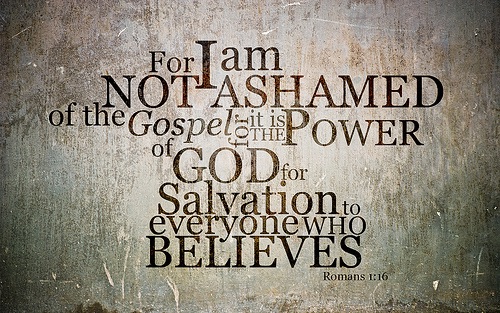
We start at the foundation — the gospel as the power of God for salvation. Not a moral tune-up. Not a “try harder next time” plan. Actual, transforming power. Paul doesn’t waste time easing us in; he levels the playing field fast. The Gentiles chasing lies, the Jews clinging to law, and the rest of us caught somewhere in between — all of it pointing to the same conclusion: no one is righteous. Not one. It’s humbling, uncomfortable, and exactly where grace begins.
That first week carries a kind of holy weight. You can feel it in the silence after reading Paul’s words — the realization that before we grow, we have to get honest. No one gets to stand taller than anyone else. The gospel doesn’t give us categories or ranks; it just puts us all in desperate need of mercy. And weirdly, that’s where freedom starts.
When we reach Romans 1–3, the façade starts to crack. “For all have sinned and fall short of the glory of God” (Romans 3:23) isn’t just ink on a page — it’s a mirror that tells the truth we spend most of life dodging. But right when the weight settles in, grace steps onto the scene. “But now the righteousness of God has been manifested apart from the law… through faith in Jesus Christ for all who believe” (Romans 3:21–22). It’s like the light switches on in a dark room. We don’t walk out condemned — we walk out covered. That’s where the story of salvation really begins.
What is grace, really? It’s getting what we absolutely don’t deserve — and knowing it. But grace isn’t some free pass to live careless; it’s far too costly for that. Real grace doesn’t look away from sin or pretend it’s fine. It faces it head-on, holds it in the light, and says, “Even here, you’re loved.” Grace doesn’t hand out excuses; it hands out freedom. It reaches into the wreckage and starts rebuilding what we thought was beyond repair.
Grace is power — not polite, not predictable, but fierce and alive. It doesn’t wait for us to clean up, pray harder, or finally get it right. It climbs down into the mess with nail-scarred hands and lifts us out. It restores what pride ruined. It heals what shame hides. And maybe the most shocking part? It plays no favorites. The cross levels us all — no hierarchy, no special cases. Just sinners turned sons and daughters by the same mercy.
That kind of truth has a way of quieting the room. Defenses drop. Masks come off. You start to see that confession isn’t losing — it’s the first real breath of freedom. Somewhere in that realization, grace stops being a concept and starts being the heartbeat of the gospel. It’s why we can stand again after falling, speak again after silence, and live again after dying inside. Grace isn’t the prelude to faith — it’s the pulse that keeps it alive.
Week Two:
Justification by Faith
Week 2 is like pressing a reset button — a reminder that grace alone justifies us, period. No fine print. No performance clause. We step out of the tension of Romans 1–3 and right into the kindness of a God who calls the ungodly righteous. And yes, that includes the person you can’t stand, the one you silently think doesn’t belong in the “grace club.” Turns out, grace doesn’t take applications — it just adopts. Not because of effort. Not because of status. Just faith. That’s it.
Walking through Abraham’s story made that truth sink even deeper. Faith has always been the way. Long before church buildings, worship bands, or denominational lines — it’s always been about trust. Abraham believed God, and that belief became his righteousness. That’s wild. It’s also freeing. The gospel didn’t start in Matthew; it’s been unfolding since Genesis. Promise over performance. Relationship over rule-keeping.
Then Romans 5 shows up like a deep breath for tired souls. “Therefore, since we have been justified by faith, we have peace with God…” (Romans 5:1). Not a fleeting feeling or a “good vibes only” peace — but a solid, blood-bought standing. The kind that steadies you when life unravels. Grace holds when everything else shakes. It doesn’t flinch, doesn’t fade, doesn’t fail. It’s the anchor that keeps pulling us back to the same simple truth: we are not saved by what we do for God, but by what He’s already done for us.
It almost seemed as if this night everyone was allowed to take a deep breath. The weight of performance had quietly lifted, replaced by gratitude and rest. Grace had moved from being a word we use to being a presence we felt—steady, unhurried, enough. We left reminded that faith isn’t about striving harder but trusting deeper, and that even when our grip loosens, grace still holds firm.
Week Three:
New Life in Christ
Week 3 got personal — like, uncomfortably personal. Romans 6–8 doesn’t let you hide behind theology; it drags everything into the light and asks, “So… who are you now because of Christ?” It’s not a rhetorical question. Paul starts talking about dying with Christ and walking in newness of life, and it’s not poetic fluff. It’s real — like trading identities, not just making improvements.
Romans 7 hit especially hard. Paul’s honesty — “I do not do what I want, but I do the very thing I hate” — feels way too familiar. Everyone’s nodding because we’ve all lived that tension, but most just don’t say it out loud. Somewhere along the way, church people learned how to fake fine. But the truth? People can spot fake a mile away, and no one’s buying it anymore. If we can’t be honest about our mess, how will anyone believe the gospel actually changes anything?
So, we ripped off the masks. We stopped pretending spiritual maturity means constant victory and started admitting that following Jesus doesn’t erase the struggle — it reframes it. Romans 8 shows up like a sunrise after a long night: “There is therefore now no condemnation for those who are in Christ Jesus.” No more shame hangovers. No more pretending we’re not human. The Spirit meets us right in the middle of the fight, intercedes when words fail, and keeps reminding us that nothing — not fear, not failure, not even our worst thoughts — can separate us from the love of God. That truth doesn’t just stay in your head; it settles deep in your bones.
There’s something freeing about just saying what everyone already knows — we’re not as put-together as we like to appear. No more smiling through chaos or dressing up our struggle in polite, churchy language. Some of us have been holding ourselves together with spiritual duct tape, but it’s time to rip that off. There’s relief in calling the mess what it is. Romans doesn’t sugarcoat it; it stares straight at the tension. But that’s where freedom actually begins — in truth, not pretense.
Then Romans 8 rises like a banner over the room: “There is therefore now no condemnation for those who are in Christ Jesus.” You can almost feel the air shift when we read it. That one sentence silences the inner critic, the guilt trips, the endless mental replay of failures. Following Jesus doesn’t erase the battle between flesh and Spirit, but it reframes it. The war is real — but it’s not hopeless. The Spirit steps in right where our willpower collapses. He intercedes when we can’t even find words, turning our sighs into prayers that reach the heart of God.
And that truth — it just stays with you. Grace doesn’t cover only the polished version of your life; it covers the part you’re still trying to hide. No pretending, no performance — just freedom. Somewhere between the laughter, the raw honesty, and the quiet moments of conviction, you start to feel it: nothing, absolutely nothing, can separate you from the love of God.
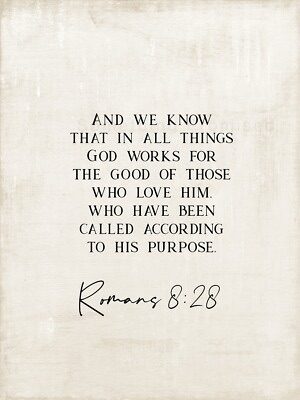
And of course, I can’t leave Romans 8 without talking about my anchor — my absolute favorite verse, the one I live by and come back to every single time life blindsides me: Romans 8:28.
Οἴδαμεν δὲ ὅτι τοῖς ἀγαπῶσιν τὸν Θεὸν πάντα συνεργεῖ εἰς ἀγαθόν, τοῖς κατὰ πρόθεσιν κλητοῖς οὖσιν.
“And we know that all things work together for good to those who love God, to those who are called according to His purpose.”
That verse isn’t wishful thinking — it’s a lifeline. It doesn’t say everything is good; it says everything works together for good. Even the heartbreaks. Even the waiting. Even the things you’d give anything to undo. God weaves it all with purpose. So when life doesn’t make sense, and the story feels stuck somewhere in the middle, I hold to that promise like oxygen — because I know the Author never wastes a single line.
Week Four:
God’s Sovereignty and Israel
Romans 9 drops us straight into the deep end — no floaties, no warning. Paul’s heartbreak over Israel hits like a punch to the gut. You can feel his anguish, his confusion, his longing for his people to get it. And from that raw place, he cracks open one of the hardest truths in Scripture: God’s freedom to have mercy on whom He chooses. Let’s be honest — this is the chapter that makes some folks squirm. It forces us to face the fact that God doesn’t owe anyone explanations.
But here’s the thing — Paul doesn’t write about sovereignty like it’s some cold algorithm. There’s warmth in it. Reverence. It’s the sacred kind of mystery that humbles you without crushing you. Somewhere between the tension and the trust, it starts to click: God’s mercy isn’t mechanical; it’s intentional. He sees the full story even when I’m still stuck on the sentence.
Romans 9 seems to bring a sense of quiet relief. You don’t have to understand every move He makes. You just have to know He’s good — even when His ways make zero sense on paper. Sometimes faith looks less like figuring it out and more like unclenching your fists and saying, “Alright, God… I trust You know what You’re doing.” And honestly, that kind of surrender? It’s harder than any theology exam Paul could’ve written.
The more I sit with it, the more I realize how much I need that reminder. I like control — I like plans, reasons, timelines that make sense. But Romans 9 blows all that up in the best way. It reminds me that I’m not the potter; I’m the clay. And as much as I’d love to grab the wheel sometimes, the truth is, my version of “fair” usually just means “comfortable.” God’s version is so much better — it’s redemptive. Even when His choices stretch my understanding, they never miss His purpose. There’s peace in that, even if it’s the kind that only comes after a few deep breaths and a long stare off into space.
Week Five:
God’s Sovereignty and Israel
Week 5 feels like God zooming the camera way out and saying, “See? I told you I knew what I was doing.” All those tangled threads we wrestled with in earlier chapters start weaving into something beautiful. Paul shows that Israel’s stumble wasn’t a glitch in the plan — it was part of it. Their moment of rejection cracked open a door wide enough for the rest of us to walk through. The image of the olive tree hit me right in the chest — wild branches grafted in where we don’t “naturally” belong. It’s humbling and freeing all at once. We’re not here because we earned a spot; we’re here because mercy invited us to the table.
And that mercy? It doesn’t quit. Paul makes it clear that God isn’t done with Israel — not by a long shot. Nobody gets written off. Nobody is too far gone. God’s grace doesn’t ghost people; it goes after them. That’s the kind of mercy that refuses to let the story end in loss. It makes my definitions of “fair” look small and my assumptions about who’s “too far gone” look foolish. Grace is relentless like that — stubborn and steady, rewriting endings I thought were final.
Then Paul just breaks into song. “Oh, the depth of the riches and wisdom and knowledge of God!” You can almost hear his voice cracking — he’s not teaching anymore, he’s worshiping. It’s like he runs out of words to explain and just stands in awe. Honestly, that’s where I land too. I don’t understand all of God’s moves, and I’ve stopped pretending I need to. I just know He’s good. And if His mercy can graft in wild branches like us, then there’s no story He can’t redeem.
Week Six:
Living Sacrifices — The Christian Life
Week 6 hits different — it’s where Paul stops preaching and starts meddling. After eleven chapters of heavy theology, he drops the question that ruins all excuses: “So what now?” And then he answers it — “Present your bodies as a living sacrifice.” That line gets me every time. It’s poetic until you actually try to live it. Because a living sacrifice doesn’t get to pick and choose — it climbs on the altar daily and stays there when it wants to crawl off. This isn’t the “spiritual” corner of life; it’s all of it. Every hour, every conversation, every scroll, every reaction. We can often times live as burnt offerings, and that is absolutely miserable.
Living like a burnt offering will make Romans 12 reads like a to-do list for people who actually want to look like Jesus: love without faking it, outdo one another in showing honor, bless the people who drive you insane, give freely, sit with those in pain. It’s the kind of chapter that leaves you nodding until you realize it’s describing the life you’re still learning to live. It’s practical, but not easy — a daily gut check that reminds you holiness isn’t found in lofty moments but in ordinary ones done with love.
Then moving into Romans 13, Paul turns up the heat: honor authority, walk in integrity, wake up to what time it is, and “put on Christ.” That last phrase — that’s the kicker. It’s not about pretending to be holy; it’s about letting Jesus reshape every detail of your day. This is where the gospel stops being a belief system and becomes a way of breathing. It’s the slow, steady surrender that shows up in tone, posture, patience, and presence. The kind of faith that doesn’t just talk — it lives.
Week Seven:
Liberty, Unity, and Disputable Matters
Week 7 is right where church life gets real — the part nobody puts on the church social media page. Paul dives straight into the mess of differing opinions, personal convictions, and cultural clashes, and basically says, “Y’all need to chill and love each other.” We have made it so common to argue and divide ourselves over secondary issues, but navigating through those things can be easier said than done. It’s one thing to “welcome one another” when we agree; it’s another when we’re convinced the other person is flat-out wrong. But Paul isn’t calling for uniformity — he’s calling for unity. There’s a difference.
He reminds us that strength in Christ isn’t about being the loudest voice in the room or winning the theological debate. It’s about restraint. It’s knowing you could make a point, but choosing peace instead. Romans 14 and 15 feel like a masterclass in spiritual maturity — love that carries more weight than ego, humility that bends instead of breaking, and patience that costs you something. Because loving people who think differently isn’t weakness. It’s worship.
This passage exposes the subtle pride that hides behind “good intentions.” It forces me to ask whether I care more about being right or being like Christ. And honestly? That stings a little. But it’s the kind of sting that heals. True strength isn’t flexing your freedom — it’s using it to protect someone else’s faith. It’s biting your tongue when you could win the argument, so the gospel wins instead. That’s the kind of love that holds a church together. That’s the kind of love that reaches into the world.
Week Eight:
Paul’s Mission and Final Greetings
Week 8 feels like coming up for air after diving deep. The final chapters of Romans tie everything together — Paul’s heart, his mission, his friendships, his relentless passion for the gospel. You can feel the shift from theology to relationship. These aren’t just names in a list; they’re people who’ve bled, prayed, and laughed beside him. It’s like reading the credits of a movie you don’t want to end — except every name carries a story of grace that somehow made the gospel move forward.
What gets me is how real it all feels. Paul isn’t sitting in an ivory tower; he’s writing like a man who’s lived this stuff. His greetings are tender, his gratitude personal, his warnings sharp but full of love. It’s messy in the best way — a reminder that the Church has always been a patchwork of personalities, preferences, and purpose held together by one thing: Jesus. Romans ends not in theory, but in relationship — the kind of kingdom community where faith has fingerprints and faces.
As I sit in it now, I’m struck by how this journey has changed me. Romans isn’t just the starting line of the gospel; it’s the whole race. It’s wrecked my pride, rebuilt my hope, and reawakened my awe. I see grace differently now — not as a backdrop, but as the fabric holding it all together. And maybe that’s the takeaway that sticks the longest: the gospel isn’t meant to stay on the page. It’s meant to spill into how we live, lead, forgive, and love. My prayer is that what started in this study keeps echoing — that we won’t just finish Romans, but that Romans keeps finishing its work in us.
Thank you — truly — for walking this journey with me. I cannot wait until the next one!
Discover more from Coenology
Subscribe to get the latest posts sent to your email.
 Coenology
Leave a comment