
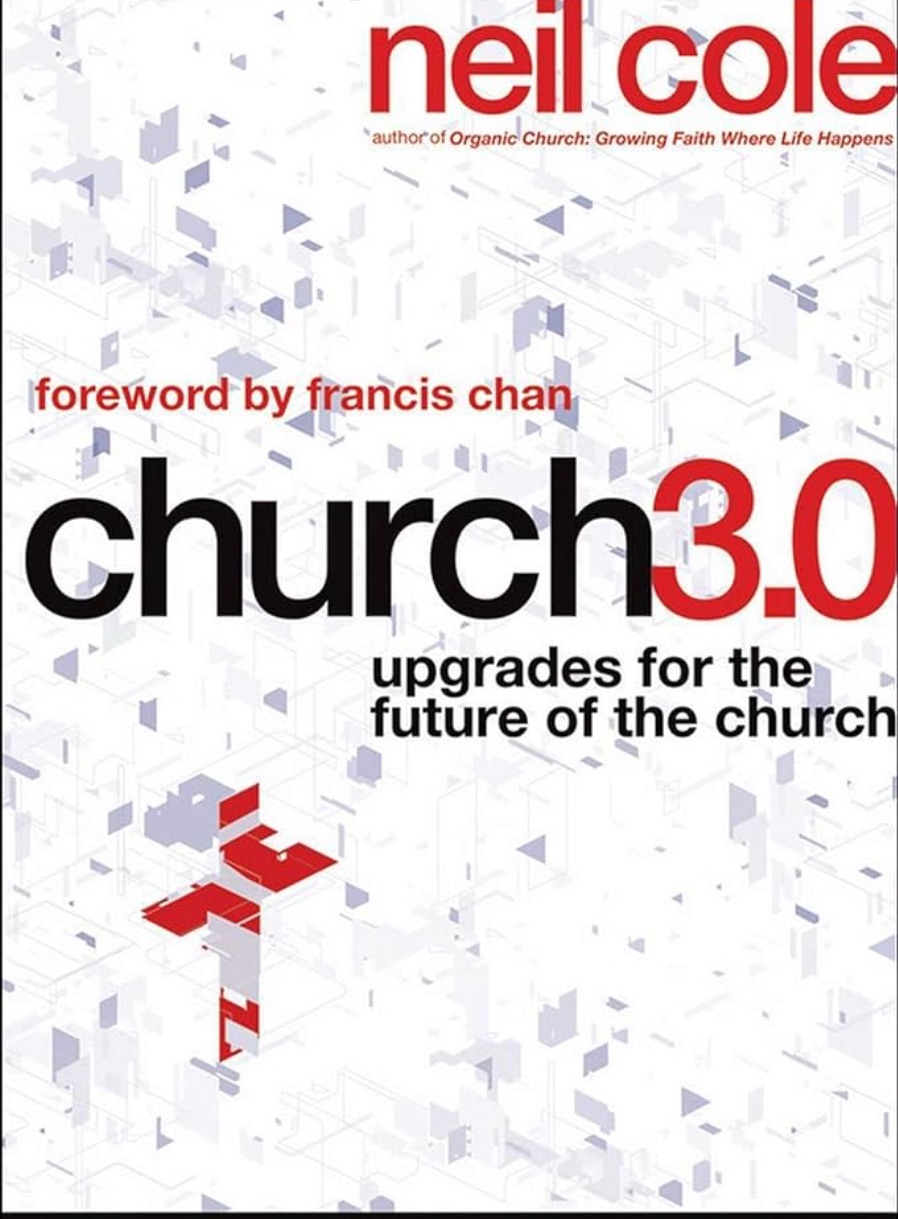
When I think of having to nail down my overall philosophy on “church” or the growth of the church body itself, I cannot do so without acknowledging so much of what Neil Cole uses in his book Church 3.0. I was first introduced to this book in one of my courses pursuing my M.A. in Theological Studies and when I tell you that so much of it stayed with me, it really did. Church 3.0: by Neil Cole is a compelling and challenging examination of what it means to be the Church in a postmodern, rapidly changing world. And encase you haven’t realized it, our world is certainly changing with the quickness. As a follow-up to his influential work “Organic Church,” He expands his vision of decentralized, disciple-making communities by presenting a practical and theological argument for reimagining the Church’s structure and mission. I know that makes so many traditional church members nervous. Don’t worry – after 18 years of doing things the same way, I can attest to the fact that it’s okay to do things differently. It works a whole lot better than what we have been doing. Rather than simply tweaking the existing model, Cole proposes a total “upgrade,” hence the metaphor of moving from Church 1.0 and 2.0 to 3.0. It’s time for a 3.0 upgrade.
At the heart of Cole’s argument is the belief that the institutional Church, in its current form, is no longer effectively making disciples or reaching the lost in Western culture. And if you argue that it is effective, please understand that my disagreements are wholeheartedly based on the statistics of the majority. The toxic environment of so many churches today combined with the poor leadership and ineffective programs are enough to conclude that it’s not working the way it should be working. He critiques traditional church structures that prioritize buildings, programs, and clergy-led ministry over relational, missional, and reproducible models. Church 3.0, as he defines it, is a movement-oriented paradigm that empowers ordinary believers to start simple churches wherever they are—homes, cafes, parks—rooted in authentic relationships and Spirit-led discipleship. It’s time to take the church outside of the walls. The focus for far too long has been placed on a building. This is not a protest to do away with church, it’s a suggestion to start doing things differently. Traditional church is consistent – week after week, but it’s not as effective as it could be.
One of the strongest features of the book is its emphasis on scalability and multiplication. Cole presents the idea that the DNA of the Church—divine truth, nurturing relationships, and apostolic mission—can be embedded in every believer and every small group, allowing the Church to grow virally. He outlines how leadership development and spiritual maturity can flourish in decentralized networks without being hindered by bureaucracy or professionalization. So much of what the church stands for has been limited to the traditional programs and centralized functionality. One place with few people calling all the shots.
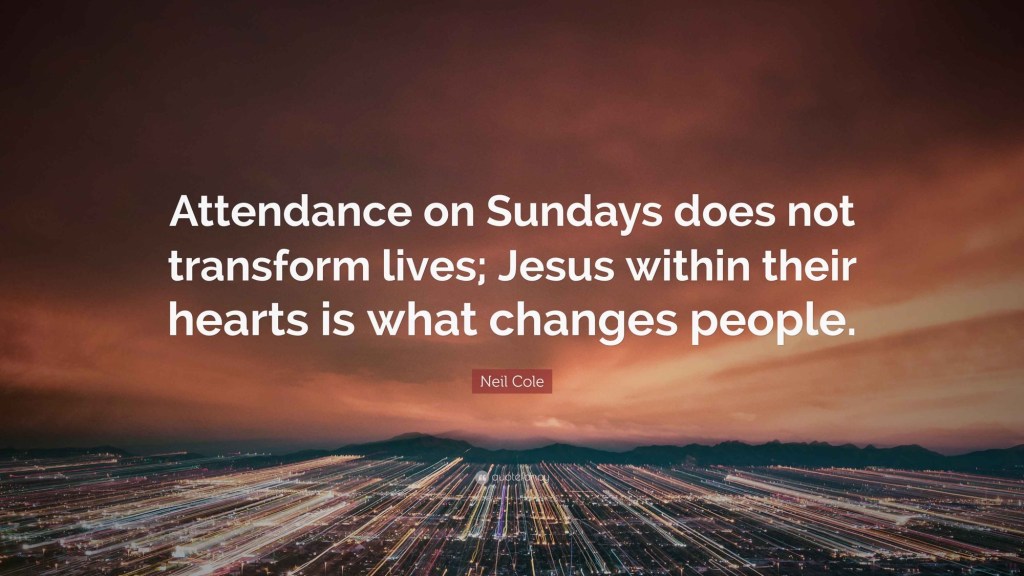
Church 3.0 tackles common objections and fears about simple church movements, such as theological accountability, pastoral care, and heresy. His responses are thoughtful, though some readers may find them overly optimistic or underdeveloped. He believes that true discipleship and community will naturally address these concerns when believers are equipped and empowered through mentoring and mutual accountability.
A notable strength of Church 3.0 is the insistence that the Church is not an event or place, but a people on mission. That’s a central question for you to ask yourself, when is the last time you really felt like you were on a mission for the Kingdom? Or were you just on a schedule to attend church? He roots his ecclesiology in biblical theology, particularly the book of Acts, and appeals to the organic growth of the early Church as a model for today. If we really want to get technical, going back to the “tradition” of the matter – it seems to be fair to suggest what worked then would most certainly work today. His writing is passionate and prophetic, challenging readers to let go of control and trust the Holy Spirit to guide the Church’s growth. Could that be the underlying issue with trying such a new perspective? Control? Has it become all about maintaining control under a few with a title? I am not compelling anyone to become offended but it’s past time for churches to be limited in their functionality to just the few with the title. We need order and we need guidance, but we are far beyond the days of dictatorships.
Cole believes the Church is suffering under outdated forms and rigid leadership models that do not reflect the flexibility and spirit-led dynamism of the early Church. My heart breaks to see so much tradition being used as a shelter for the religious to hide under as a mask. I am compelled to agree with Neil’s assessment for the most part. There are certainly churches that have broken away from the traditional mold and the evidence of effectiveness can be recognized no doubt. Then there are others that are completely indoctrinated to remaining the same as they have always been. Neil suggests that it’s time to trust the Holy Spirit and step outside of the comfort zones. He offers Church 3.0 as a vision for church life that is adaptive to cultural change, rooted in biblical principles, and scalable across nations.
Cole draws a hard line between missional churches (Church 3.0) and maintenance churches (Church 1.0 and 2.0). That one can really hit differently. Is your church more missional or maintenance oriented? He believes that the primary failure of the modern church is its inward focus and institutional survival mentality. There is so much emphasis placed on the institution that it has become institutionalized. Our culture has enough of that going on around them. They are no longer interested in the institution – but they are desiring to experience the intentional!
A maintenance church focuses on preserving existing structures, programs, traditions, and memberships. Its primary goal is to care for those already within the church rather than actively pursuing those outside it.A missional church sees itself as a sent community, participating in God’s mission (missio Dei) to redeem and restore the world. It focuses on disciple-making, cultural engagement, and community transformation over institutional preservation.
✅ Missional Churches:
May meet in homes, coffee shops, or outdoors.
Equip laypeople to lead, disciple, and multiply.
Engage with social issues, justice work, and local needs as part of their gospel witness.
Plant churches that reproduce rapidly through relational networks.
🚫 Maintenance Churches:
May struggle to adapt to cultural shifts (e.g., post-Christianity).
Rely heavily on staff, budgets, and programs for ministry.
May experience decline in engagement among younger generations.
Tend to measure faithfulness in terms of preserving the past, not reaching the future.
Acts 1:8 – “You will be my witnesses… to the ends of the earth.”
Matthew 28:19–20 – “Go and make disciples of all nations…”
Luke 10:1–9 – Jesus sends out the 72 to prepare the way.
The early Church (Acts 2–4) operated more like a missional movement than a maintenance institution. It was agile, community-focused, and multiplication-oriented, often meeting in homes and responding to needs as they arose. Our focus has to be more on the community than the clique. If 12 disciples could quite literally turn the world upside down, then our churches with 100-200 people and even some with 3,000-5,000 should be able to leave a lasting impression. Multiplication is the way of the kingdom – NOT division! Church splits and division is the result of institutions that are more focused on the centrality of the church than the community outreach. It becomes more about cosmetics than it does reaching the lost.
The reason I share this is because I am passionate about doing church different. I believe that things can be different and they are being done differently all over the world. I believe we live in one of the greatest opportunities in the world to share the good news with others. I mean you are reading this somewhere in the comfort of your own home or sitting on an airplane trying to pass the time. You didn’t have to come listen to me speak behind a pulpit. Our world has become overflowing with opportunities and the only way we can take them is to do it differently.
I have been in church my entire life. I am not ever going to say church does not have a place in our life. I believe that it does. I love coming together and worshipping with my church family each week. But I have also experienced what it’s like to place more emphasis on the people outside of the church than on the inside and I won’t ever go back to the way it used to be done. I believe our celebrations on Sunday can only become greater as we step away from the mold that has been given to us from the previous 10 generations and look further back to the 1st and 2nd generations. The more emphasis we place on bringing the church outside of the walls and carrying it with us everywhere we go, and the less we idolize our central meeting locations that are only being used 1-2 days a week, the greater the opportunity for us to see the bigger picture as to how our church can reach further into the community.
In reality we do not need more people to come to church. The light bill and salaries need more people to come or less people to give more – whichever works first. But what we really need is to take who we have and step outside the walls as who God created us to be and take our light with us into the world and LIVE ACCORDINGLY.
It is very easy for us to shine the Gospel to each other in the safety of our church with our fellow saints leading the way. But the days of just inviting are not going to be as effective if we don’t live our light out loud for someone else to bear witness to it and make up in their mind that they want to have relationship with us! Yes I said US! Jesus works through us and we are to be His disciples and by sharing who we are created to be with others, we are sharing His light! This is the transformative moment when the people around us begin to be compelled to come and worship with us and share in prayer together and Bible studies. Church 3.0 doesn’t begin on Sunday morning – it ends there! It begins on Monday morning and Tuesday afternoon on into Wednesday and Thursday and Friday and then Saturday. Church 3.0 might require for us to make some hard decisions and embrace some humility, but it also invites us to a whole new level of the Kingdom and sharing the Gospel.
If you haven’t had the chance to read this book. I recommend it for everyone, but especially for church leadership and ministers. “Church 3.0” is a provocative and energizing read for those seeking to reimagine the Church in mission and structure. It is time we reimagine some things. Neil Cole invites the Church to return to its roots as a Spirit-filled, disciple-making movement rather than a static institution. Whether or not one agrees with every aspect of his proposal, the book serves as an important conversation-starter for leaders, planters, and believers longing for a more faithful, missionally engaged Church in today’s world.
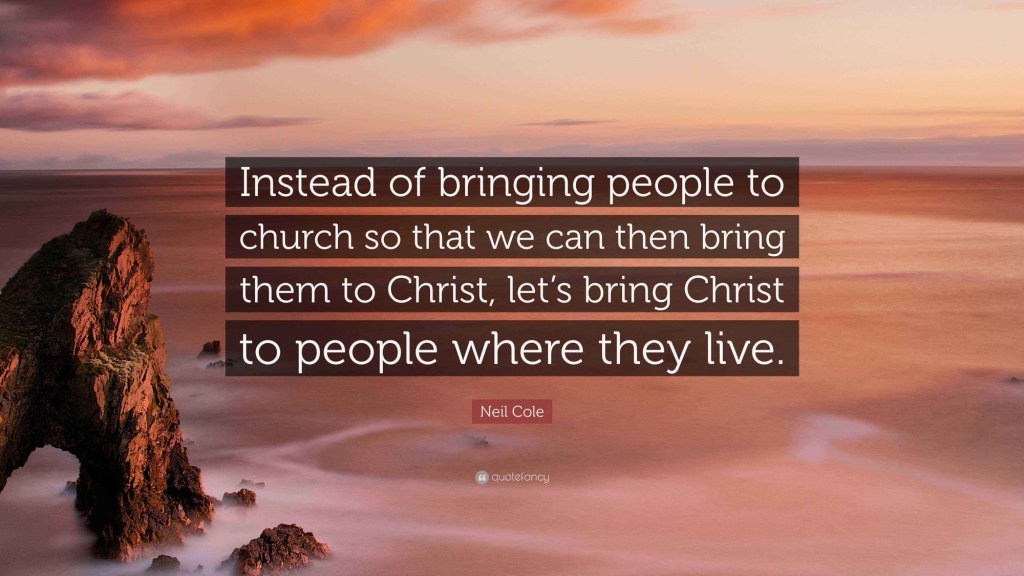
I believe that so much of what church 3.0 points to is exactly what is needed in our community today. The traditional model of gathering together on Sunday does not have to go away, but it certainly does not have to remain the same. For those who have decided to step outside of the realm of tradition, you can attest to the importance of this and the effects it has on the people in a profound way. It is time to take it up a level to Church 3.0!
Discover more from Coenology
Subscribe to get the latest posts sent to your email.
 Coenology
Leave a comment